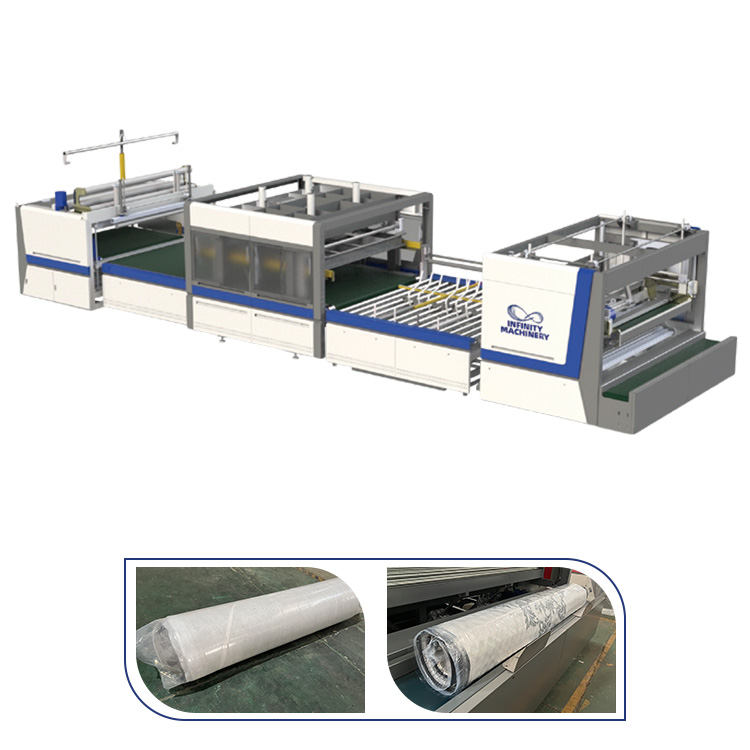
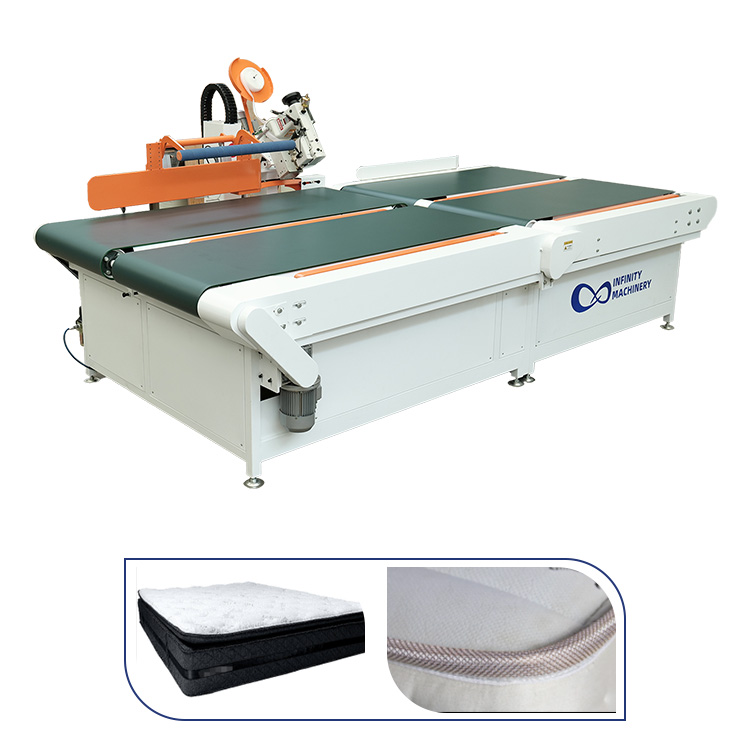
Have you ever wondered exactly how a mattress goes from raw foam blocks, fabric rolls, and steel wire to a finished product sitting in a customer's bedroom? The journey involves multiple specialized machines working in sequence — and when they are connected into an integrated production line like the IF-APL Mattress Automatic Línea de Producción, the entire process becomes seamless and highly efficient.
In this walkthrough, we will take you through each production stage step by step. You will see what happens at every station, which machines are involved, how long each step takes, and how automated transfer systems move the mattress-in-progress from one stage to the next.
By the end, you will have a complete mental model of a modern mattress factory — and a clear picture of what it takes to build a production line that can output 400+ finished mattresses per shift.
Cada colchón comienza como materias primas. Tres corrientes principales de materiales alimentan una línea de producción:
En una línea de producción totalmente integrada, estas materias primas se colocan en sus estaciones de inicio respectivas y se alimentan al proceso automáticamente. The IF-APL line coordinates the flow so that each material arrives at the right station at the right time.
Los bloques de espuma en bruto son demasiado grandes e imprecisos para la producción directa de colchones. El primer paso de procesamiento es cortar la espuma en las láminas exactas necesarias para cada capa del colchón:
Cut foam sheets move to the next stage on conveyor belts or automated guided carts. The IF-APL line includes automated transfer systems that move cut foam directly to the quilting or assembly stations without manual handling.
Para colchones de resortes ensacados o Bonnell, el ensamblaje de la unidad de resortes ocurre en paralelo con la preparación de la espuma:
In a full production line, the spring assembly runs simultaneously with foam cutting, quilting, and fabric preparation — all coordinated so that components arrive at the assembly station at the same time.
Mientras se corta la espuma y se ensamblan los resortes, el departamento de acolchado prepara las capas de la funda del colchón. Quilting is the process of sewing together multiple layers of fabric and foam padding in decorative patterns:
Completed quilted panels and borders move to the sewing station. In an integrated line, quilting and panel cutting are synchronized so that finished panels arrive at the sewing station just as the foam and spring components arrive at the assembly point.
Esta es la etapa donde el colchón toma su forma final. Las capas de espuma, la unidad de resortes (si corresponde) y los paneles acolchados se ensamblan en un colchón completo:
The assembled mattress is now a complete unit — but it still needs finishing before it can be shipped.
La etapa de acabado le da al colchón su apariencia final, lista para la venta. Two finishing methods are used depending on the product design:
The border fabric is sewn directly to the top and bottom panels without an additional tape strip. Result: a clean, seamless edge appearance preferred for modern mattress designs. A skilled operator can flange 400-600 mattresses per shift.
A decorative tape strip is applied around the mattress perimeter and sewn through all layers. This creates a classic, traditional mattress look. Automatic tape edge machines can process 500-700 mattresses per shift.
Many factories in the IF-APL line run both flanging and tape edge stations, giving them the flexibility to produce both modern and traditional mattress designs on the same production line.
La etapa final transforma un colchón voluminoso en un paquete compacto y enviable:
Here is how long each stage takes in a modern integrated production line like the IF-APL:
| Etapa | Tiempo por Colchón | Trabajadores | Nivel de Automatización |
|---|---|---|---|
| Corte y conformado de espuma | 45 sec (batched) | 1-2 | High |
| Ensamblaje de resortes (si aplica) | 60 sec (batched) | 1-2 | High |
| Acolchado y corte de paneles | 90 sec (batched) | 1-2 | High |
| Ensamblaje (apilar + coser) | 120 sec | 2-3 | Medium |
| Flanging / cinta de borde | 45-90 sec | 1-2 | Medium-High |
| Compresión & packing | 30-40 sec | 1-2 | High |
Total por colchón: Aproximadamente 6-8 minutos de tiempo combinado de máquina y mano de obra, with multiple stations working in parallel. El rendimiento real es de 400-600 colchones terminados por turno de 8 horas, depending on mattress complexity and workforce size.
Whether you are building a new production line or upgrading an existing one, these three machines form the backbone of an efficient mattress factory.
A modern mattress production line is a carefully orchestrated sequence of specialized machines, each performing its task with precision and speed. From the raw foam block entering the cutting station to the finished rolled mattress emerging from the packing machine, every step is designed to maximize throughput while maintaining consistent quality.
The key to a successful production line is not just having the right individual machines — it is having them integrated into a seamless flow. The IF-APL production line connects every stage with automated material handling, synchronized timing, and centralized control.
Ya sea que esté comenzando desde cero o actualizando una fábrica existente, las siete etapas descritas en este recorrido proporcionan el modelo para una operación de producción de colchones eficiente y escalable.
Our production line specialists can help you design a complete IF-APL line tailored to your factory space, product types, and target output volume. Obtenga una consulta gratuita y propuesta de diseño.